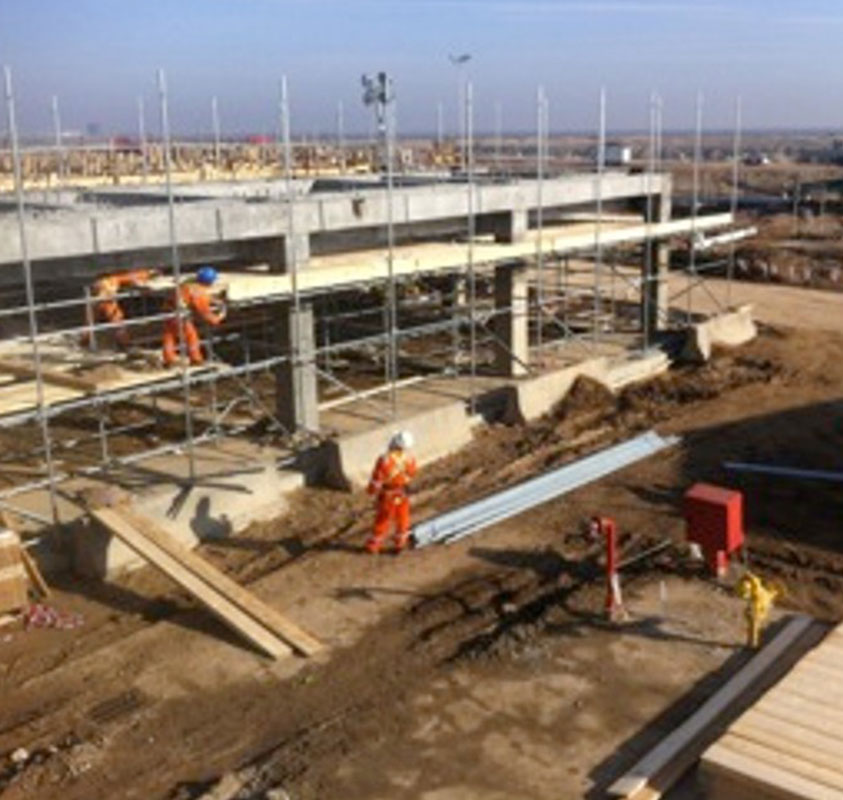
In 2012, Simian began its journey in Iraq at the Majnoon oil field—one of the most challenging and high-risk operational environments in the world.
Operated by Shell, the site presented not only industrial challenges but also the lasting impact of conflict. The area was scattered with remnants of war, including unexploded ordnance, requiring workers to undergo safety inductions that included identifying artillery shells and landmines.
Access to the site itself required military-level logistics. Personnel travelled in armoured vehicles under strict security protocols. During this period, Simian’s Managing Director, Ian Fyall, personally visited the site, witnessing the conditions firsthand.
Responding to a Critical Need
A serious scaffolding incident involving a local workforce brought operations to a standstill. It became clear that existing safety practices were insufficient for such a complex environment.
To address this, Shell engaged Simian as a specialist consultancy and training provider, with a clear objective:
to transform scaffolding safety standards and rebuild a culture of safe working.
Upon arrival, Simian identified that the challenge extended far beyond technical training.
The local workforce had lived through years of conflict and instability. Their perception of risk had been shaped by far more severe dangers than those found in industrial environments. As a result, conventional safety approaches based on strict enforcement proved ineffective.
In addition, several operational barriers were identified:
- Poor condition of scaffolding materials, including heavily corroded components
- Lack of adherence to engineering and safety standards
- Language barriers, with limited technical understanding among interpreters
- A lack of recognition of scaffolding as a skilled profession
These factors created an environment where safety could not simply be imposed—it had to be built from the ground up.
A Shift in Approach
Recognising these challenges, Simian adapted its strategy.
Instead of relying on rigid enforcement, the team focused on building trust and engagement. Relationships were developed through direct interaction, respect, and cultural understanding.
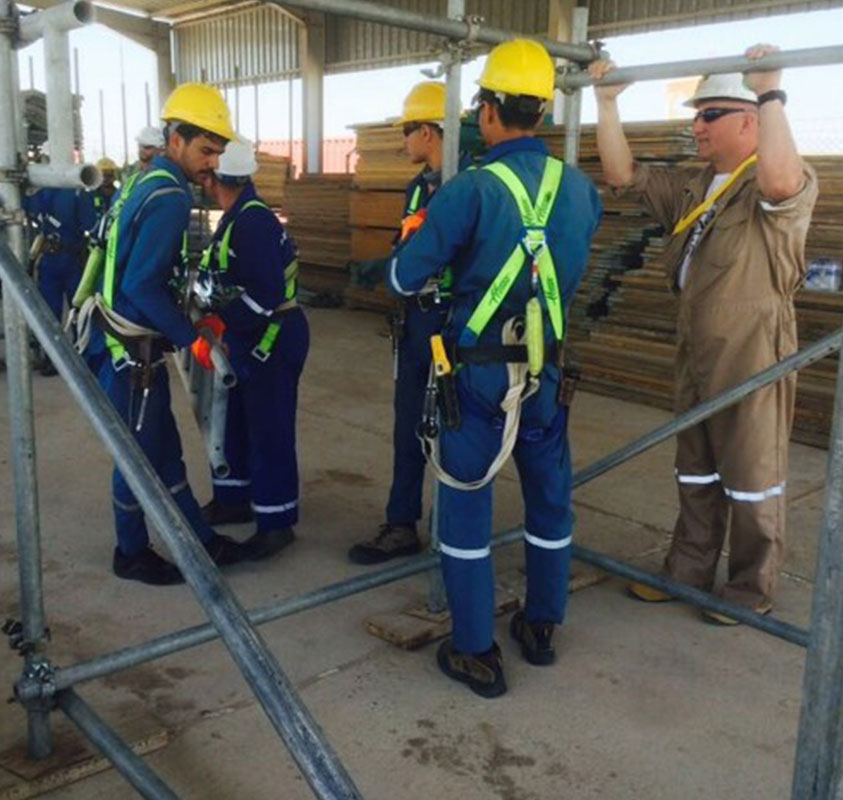
To further strengthen this approach, Simian introduced experienced Nepalese scaffolders as peer mentors. Working alongside Iraqi workers, they demonstrated best practices in a practical, relatable manner.
This shift transformed the dynamic on site. The workforce began to view Simian not as external enforcers, but as partners.
With trust established, Simian launched the first professional, UK-accredited scaffolding training programme in Iraq.
The programme was carefully designed to suit the workforce:
- Modular training sessions
- Immediate on-site application reinforced learning
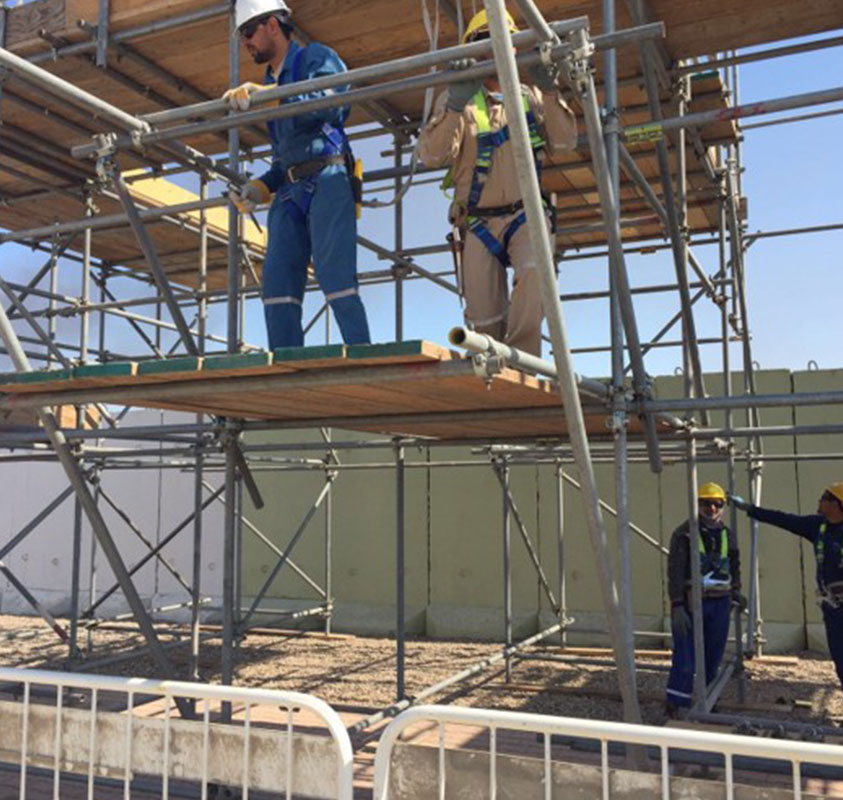
- Practical, hands-on training ensured understanding and retention
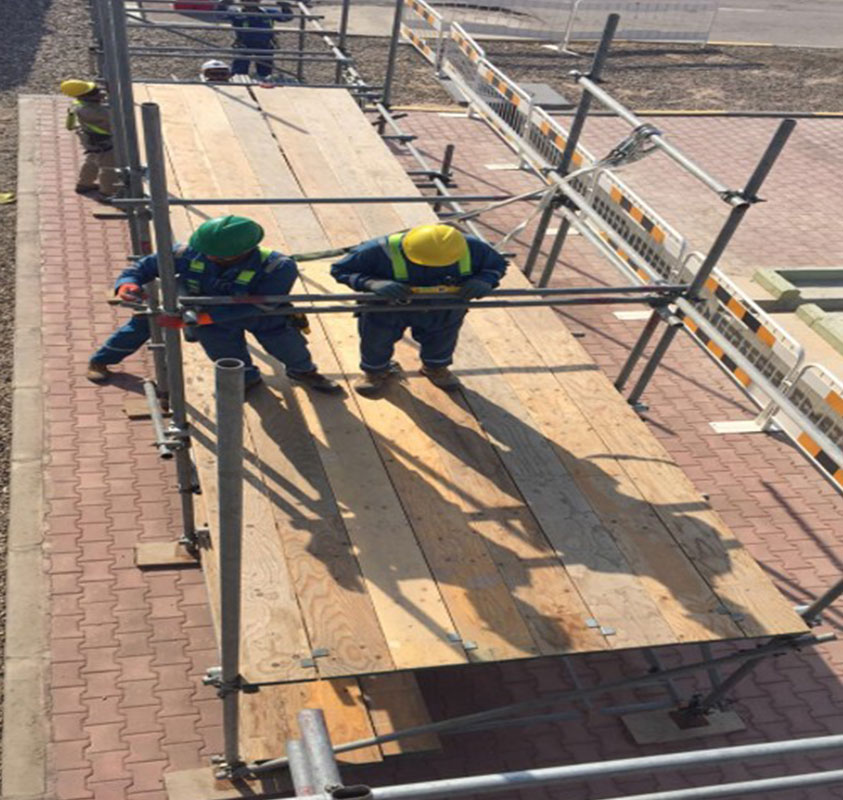
Workers were introduced to structured methods of scaffolding assembly, including:
- Accurate measurement techniques
- Proper levelling and alignment
- Safe and compliant construction practices
This marked a significant transition—from informal practices to professional standards.
Achieving Measurable Impact
Over the following five years, the results were significant.
The workforce achieved over 500,000 man-hours without a single lost-time incidenta major milestone in such a high-risk environment.
